
Introduction
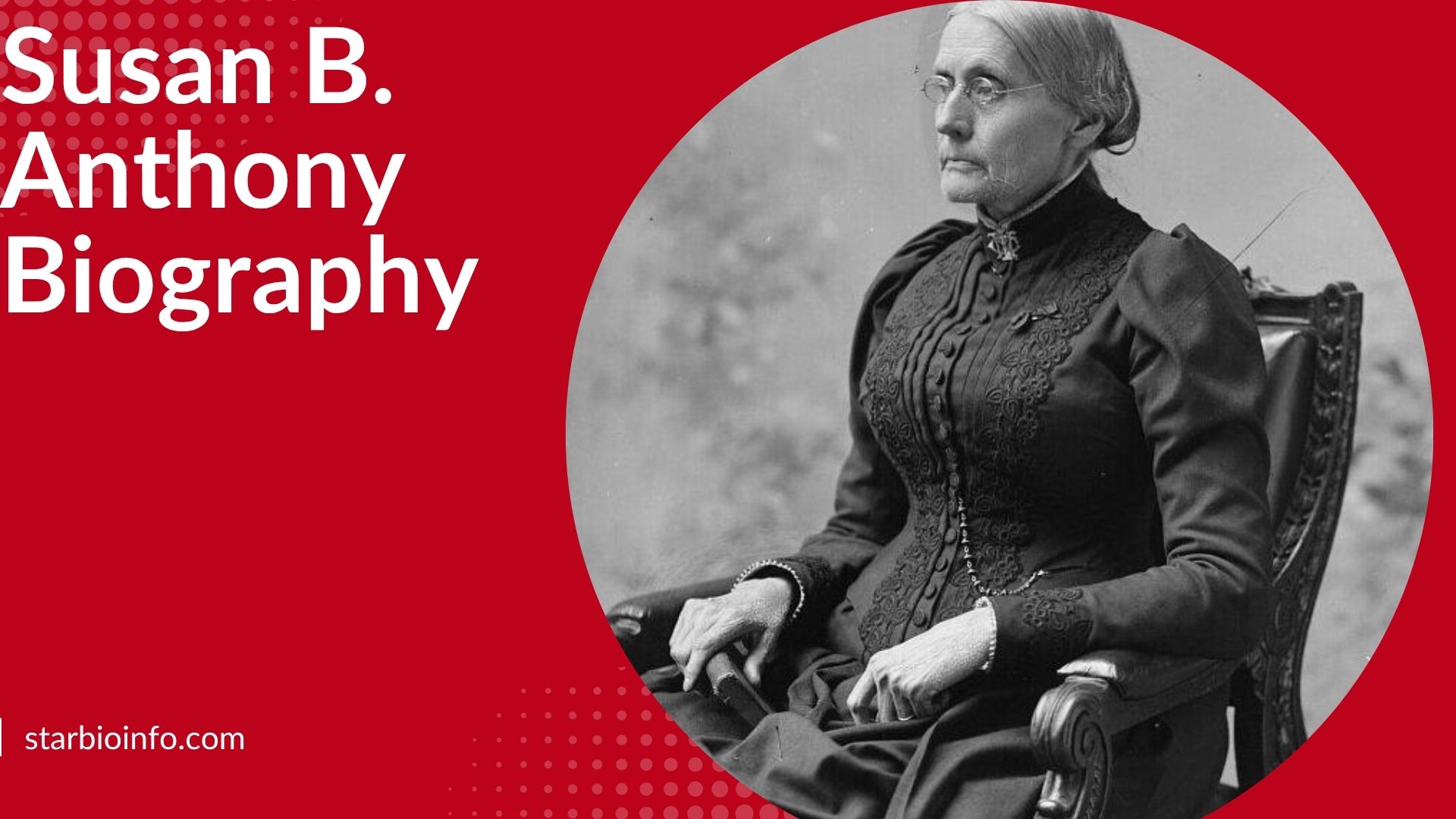
History is filled with individuals who challenge society’s limitations and create lasting change for future generations. Among those remarkable figures stands Susan B. Anthony, a woman whose dedication to equality and justice helped transform the fight for women’s rights in the United States.
Long before women gained the right to vote, Susan B. Anthony spent decades advocating for gender equality, educational opportunities, fair wages, and political participation. Her determination made her one of the most influential reformers in American history.
Although she did not live to see women achieve voting rights nationwide, her efforts laid the foundation for one of the most significant social and political movements in the country. Today, Susan B. Anthony is remembered as a pioneer of women’s suffrage and a symbol of courage, leadership, and perseverance.
Susan B. Anthony Quick Facts
| Detail | Information |
|---|---|
| Full Name | Susan Brownell Anthony |
| Date of Birth | February 15, 1820 |
| Birthplace | Adams, Massachusetts, United States |
| Date of Death | March 13, 1906 |
| Age at Death | 86 Years |
| Nationality | American |
| Profession | Women’s Rights Activist, Reformer, Lecturer |
| Known For | Women’s Suffrage Movement |
| Famous Achievement | Leadership in the Fight for Women’s Voting Rights |
Early Life and Family Background
Susan B. Anthony was born on February 15, 1820, in Adams, Massachusetts. She grew up in a family that strongly valued education, social responsibility, and equality.
Her father, Daniel Anthony, was a successful businessman and advocate for social reform. He encouraged his children to think independently and pursue education regardless of societal expectations.
At a time when educational opportunities for women were limited, Susan received a strong academic foundation. Her early experiences helped shape her belief that women deserved the same opportunities as men.
As she matured, Anthony became increasingly aware of the inequalities faced by women in American society.
Education and Early Career
Susan B. Anthony showed exceptional intelligence from a young age. She attended schools that emphasized discipline, learning, and personal development.
After completing her education, she worked as a teacher.
While teaching, she noticed a significant inequality that would influence her future activism. Male teachers often earned considerably higher salaries than female teachers despite performing similar work.
This experience convinced Anthony that women faced systemic discrimination and deserved equal treatment.
Her desire to challenge these injustices eventually led her into public advocacy.
The Beginning of Her Activism
Before becoming known for women’s rights, Susan B. Anthony participated in several reform movements.
She supported efforts to end slavery and advocated for social improvements affecting marginalized communities.
Her involvement in these causes helped her develop skills in public speaking, organizing campaigns, and mobilizing supporters.
As she gained experience, Anthony realized that women often faced barriers even within reform organizations. This realization strengthened her commitment to fighting specifically for women’s rights.
Partnership with Elizabeth Cady Stanton
One of the most important moments in Susan B. Anthony’s life occurred when she met Elizabeth Cady Stanton in 1851.
The two women formed a partnership that would become one of the most influential collaborations in American reform history.
While Stanton excelled at writing and developing arguments, Anthony focused on organizing campaigns, traveling, and delivering speeches.
Together, they worked tirelessly to advance women’s rights across the United States.
Their partnership lasted for decades and played a crucial role in shaping the women’s suffrage movement.
The Fight for Women’s Voting Rights
Susan B. Anthony is best remembered for her leadership in the movement to secure voting rights for women.
During the nineteenth century, women were generally excluded from political participation. They could not vote in national elections and had limited influence over laws affecting their lives.
Anthony believed this inequality was fundamentally unjust.
She traveled extensively across the country, delivering speeches and encouraging citizens to support women’s suffrage.
Her determination inspired thousands of women to become involved in the movement.
The Historic 1872 Election
One of the most famous events in Susan B. Anthony’s life occurred during the 1872 presidential election.
Anthony believed the United States Constitution already granted women the right to vote. Acting on this belief, she registered and cast a ballot in Rochester, New York.
Her actions attracted national attention.
Shortly afterward, she was arrested and charged with illegally voting.
The trial became a major public event and highlighted the growing debate surrounding women’s political rights.
Although she was found guilty, Anthony’s actions helped bring greater visibility to the suffrage movement.
Leadership and Public Speaking
Susan B. Anthony became one of the most recognizable public speakers of her era.
She traveled thousands of miles throughout the United States, speaking in churches, meeting halls, schools, and public gatherings.
Her speeches focused on equality, justice, and democratic participation.
Despite facing criticism and opposition, she remained committed to her cause.
Her ability to communicate complex ideas in a clear and persuasive manner helped expand support for women’s rights.
National American Woman Suffrage Association
In 1890, Susan B. Anthony played a key role in establishing the National American Woman Suffrage Association.
The organization became one of the leading forces behind the campaign for women’s voting rights.
Under Anthony’s leadership, the movement grew stronger and more organized.
Activists worked at local, state, and national levels to promote legislative change.
The association continued its efforts long after Anthony’s death and ultimately contributed to a historic victory.
Susan B. Anthony and the 19th Amendment
Although Susan B. Anthony passed away in 1906, her work paved the way for a major milestone in American history.
In 1920, fourteen years after her death, the 19th Amendment to the United States Constitution was ratified.
The amendment granted women the right to vote nationwide.
Many supporters considered this achievement a tribute to Anthony’s lifelong dedication.
Today, she is widely recognized as one of the most important figures behind the success of the women’s suffrage movement.
Personal Life
Susan B. Anthony never married and devoted much of her life to activism and public service.
Unlike many women of her time, she chose to focus on social reform rather than traditional domestic roles.
Her commitment required extensive travel, long working hours, and constant public engagement.
Although the work was demanding, Anthony remained dedicated to her mission throughout her life.
Challenges and Criticism
Susan B. Anthony’s activism was not universally accepted.
Many people opposed women’s suffrage and criticized her efforts.
She faced public hostility, political resistance, and social criticism.
However, Anthony refused to abandon her principles.
Her willingness to confront opposition demonstrated extraordinary courage and determination.
Legacy and Historical Impact
Susan B. Anthony’s influence extends far beyond the women’s suffrage movement.
She helped redefine the role of women in American society and inspired future generations of activists.
Her work contributed to broader discussions about equality, citizenship, and civil rights.
Today, schools, organizations, awards, and historical landmarks bear her name.
She remains a symbol of persistence and social progress.
Interesting Facts About Susan B. Anthony
Susan B. Anthony was arrested for voting in 1872.
She spent more than fifty years advocating for women’s rights.
She traveled extensively across the United States as a speaker.
She helped establish major suffrage organizations.
Her image appeared on a United States dollar coin.
The 19th Amendment is often associated with her legacy.
Frequently Asked Questions
Who was Susan B. Anthony?
Susan B. Anthony was an American women’s rights activist and leader of the women’s suffrage movement.
Why is Susan B. Anthony famous?
She is famous for fighting for women’s voting rights and helping build the women’s suffrage movement.
Did Susan B. Anthony ever vote?
Yes. She voted in the 1872 presidential election and was arrested for doing so.
Did Susan B. Anthony live to see women gain voting rights?
No. She died in 1906, fourteen years before the 19th Amendment was ratified.
Was Susan B. Anthony married?
No. She never married and dedicated her life to activism.
What is Susan B. Anthony’s legacy?
She is remembered as one of the most influential leaders in the fight for women’s equality and voting rights.
Conclusion
Susan B. Anthony’s life demonstrates how one person’s determination can influence the course of history. Through decades of activism, public speaking, and leadership, she challenged deeply rooted inequalities and inspired countless individuals to pursue justice and equality.
Although she never witnessed the final victory of the women’s suffrage movement, her contributions helped make that victory possible. More than a century after her death, Susan B. Anthony continues to be celebrated as one of the most important reformers in American history and a lasting symbol of courage, persistence, and change.